Best Espresso Coffee Grinder for Perfect Brews Worldwide?
When it comes to brewing the perfect espresso, the right grinder makes all the difference. The Espresso Coffee Grinder industry has seen significant advancements in recent years. According to a report by the Specialty Coffee Association, 50% of coffee enthusiasts prioritize grinder quality over the coffee itself. This highlights the importance of selecting the best espresso grinder.
James Hoffmann, a renowned coffee expert, emphasizes, “The grinder is the heart of espresso preparation.” His insight reflects the consensus among professionals that a high-quality espresso grinder is crucial for achieving optimal extraction and flavor. The market now offers a variety of grinders, each boasting unique features and capabilities, yet many consumers struggle to identify the best choice for their needs.
Exploring the landscape of espresso coffee grinders is essential. With numerous brands and models available, selecting the right one can be overwhelming. It's important to focus on factors like grind consistency, build quality, and user preferences. While some grinders excel in speed, they might compromise on grind uniformity. The perfect espresso grinder not only enhances flavor but also influences the entire brewing experience. This ongoing quest for the ideal grinder remains a challenge for aficionados.
Understanding the Importance of a Good Espresso Grinder
When it comes to brewing the perfect espresso, the grinder plays a
pivotal role. Data from the
Specialty Coffee Association indicates that
54% of coffee enthusiasts consider grind size to be a crucial
factor in achieving a balanced flavor. A high-quality espresso grinder ensures
consistent particle size, which is essential for optimal extraction.
Inconsistent grind sizes can result in bitter or sour
flavors in your cup.
Moreover, professional baristas emphasize that a good grinder can make or break an
espresso shot. Research shows that the extraction time and flavor profile vary
significantly with different grind settings. A study revealed that espresso brewed
with a consistent grind yielded
23% more desirable flavors compared to uneven grinds.
Yet, many coffee drinkers overlook this element. They may invest in
high-end machines while using a mediocre grinder.
It's apparent that a good grinder is not just about convenience. It requires
regular maintenance and calibration to perform at its best.
Neglecting these factors can lead to subpar results,
even with the finest beans. Many users find themselves frustrated when their
espresso doesn't match expectations. In this complexity lies an
opportunity for improvement and reflection
in one’s coffee-making journey.
Key Features to Look for in an Espresso Coffee Grinder
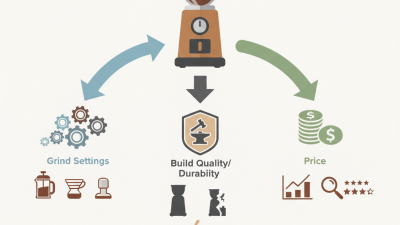
When searching for the best espresso coffee grinder, several key features stand out. The grind size consistency is crucial. A grinder should provide a uniform grind to ensure an even extraction. Inconsistent particles can lead to over-extraction or under-extraction, affecting flavor.
Another important aspect is the grind settings. Look for a grinder with multiple settings. This allows users to adjust grind size according to different brewing methods. Many espresso enthusiasts prefer a finer grind, but having options is essential for experimentation.
Here are some tips for selecting an espresso grinder:
- Consider a burr grinder over a blade grinder. Burr grinders offer precision and consistency for optimal extraction.
- Pay attention to the grinding speed. A slower grinder can reduce heat buildup and preserve flavor.
Remember, the build quality matters. A sturdy construction will ensure longevity and reliability. Investing in a quality grinder can prevent frustrating morning rituals. Reflect on your past experiences with coffee preparation, and think about how a better grinder can enhance your routine.
Top Espresso Coffee Grinder Brands Reviewed
When looking for the best espresso grinder, several brands stand out in the industry. A recent report from the
Specialty Coffee Association highlighted that nearly 70% of coffee enthusiasts prioritize grind consistency. This consistency is crucial for extracting the rich flavors inherent in quality espresso beans. Many users find that entry-level grinders often struggle with uniformity, leading to under-extraction or bitterness.
The precision of grind size contributes significantly to brewing excellence. Experts advise that professional-grade grinders produce less heat, protecting the beans' natural oils. Research revealed that the ideal temperature range for grinding should not exceed 30°C. Users often fail to monitor this, affecting their coffee quality. It's clear that a reliable grinder plays an essential role, as up to 80% of coffee flavor is attributed to proper grinding techniques.
It’s essential to consider durability and ease of cleaning when selecting a grinder. Some models can be challenging to disassemble, leading to inconsistent performance over time. Regular maintenance is frequently overlooked, diminishing the grinder's output quality. The choice of grinder directly influences the overall espresso experience. Understanding these factors can guide coffee lovers towards selecting the right tool for their brewing journey.
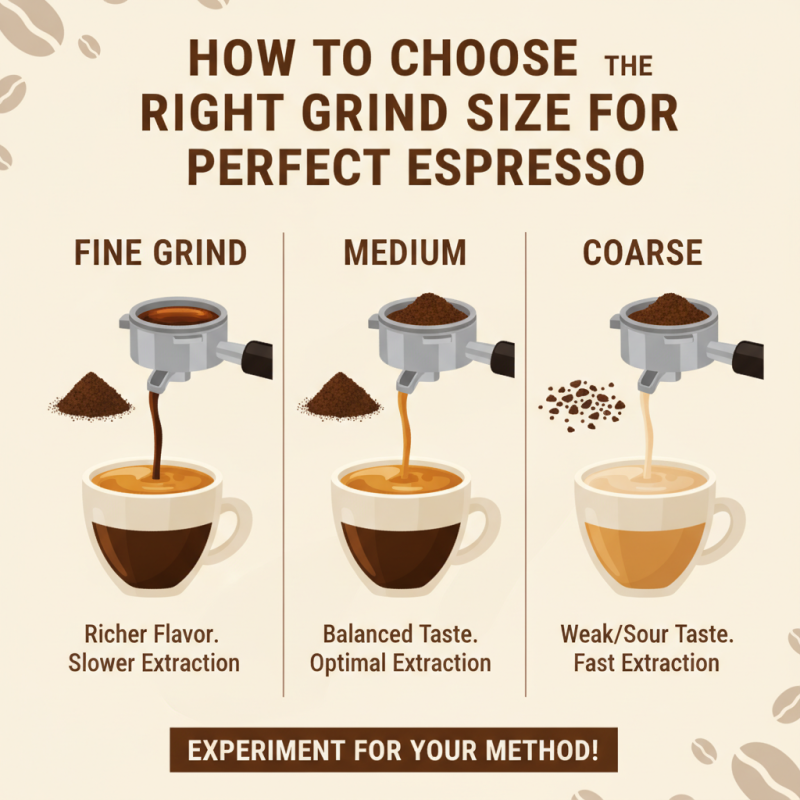
How to Choose the Right Grind Size for Perfect Espresso
Grinding the perfect espresso requires attention to detail. The grind size directly affects the extraction process. A finer grind results in a richer flavor, while a coarser grind may lead to a sour or weak taste. It’s essential to experiment with different sizes to find what works best for your brewing method.
Start with a medium-fine grind. This is often the go-to for many espresso enthusiasts. However, don't hesitate to adjust. If your espresso tastes bitter, try a slightly coarser grind. Conversely, if it lacks body, go finer. Each adjustment can dramatically alter the flavor profile.
Consider your equipment and beans too. Some grinders produce a consistent grind, while others do not. Cheap grinders may leave you with uneven particles. This inconsistency can affect extraction and flavor. Reflect on your choices. Finding the right grind size is a journey that may require patience and practice. Enjoy the process of discovering your perfect cup.
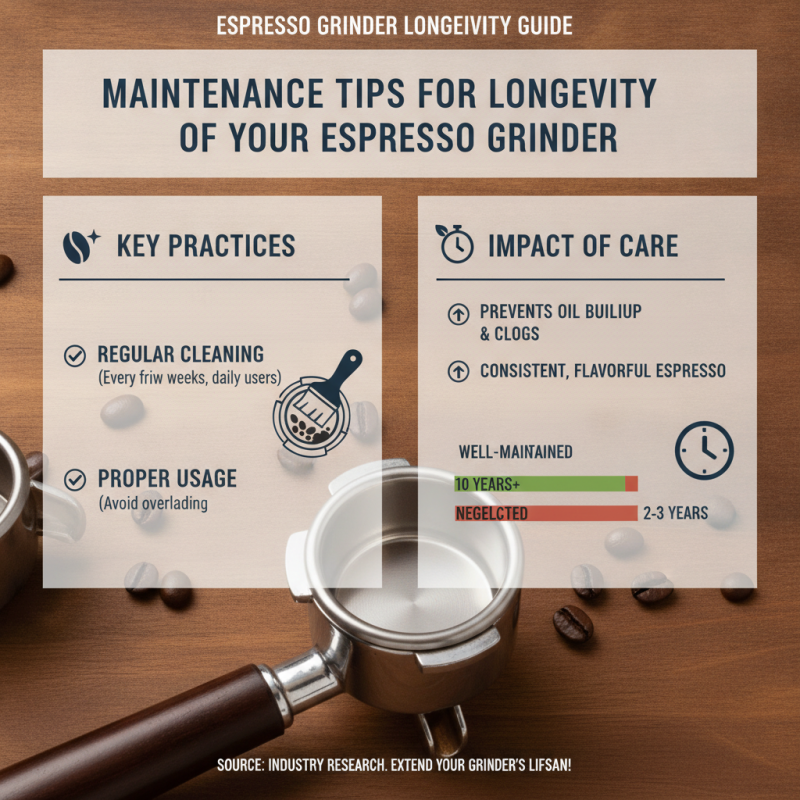
Maintenance Tips for Longevity of Your Espresso Grinder
To maintain the longevity of your espresso grinder, regular cleaning and proper usage are essential. Experts recommend cleaning your grinder every few weeks, especially if you use it daily. This prevents oil buildup and ensures your espresso remains flavorful. According to industry research, well-maintained grinders can last up to ten years, while neglected ones may fail within a few years.
Pay attention to grind settings. Using the wrong grind size can put unnecessary strain on the motor. A finer grind requires more power, which can lead to overheating. Regularly check for clogs or blockages in the grinder’s burrs. A clean burr impacts grind consistency, directly affecting your espresso's taste. Interestingly, studies show that consistent grind size enhances extraction, leading to improved flavor profiles.
Storing your grinder properly also contributes to its lifespan. Avoid exposing it to moisture or extreme temperatures. Create a designated space in your kitchen for your equipment, ensuring it’s easy to access and maintain. Despite our best efforts, wear and tear is natural. Reflect on your maintenance routine regularly and make adjustments as needed. Whether it’s cleaning frequency or storage methods, small changes can lead to significant improvements in performance and durability.