How to Choose the Best Espresso Bean Grinder for Your Needs?
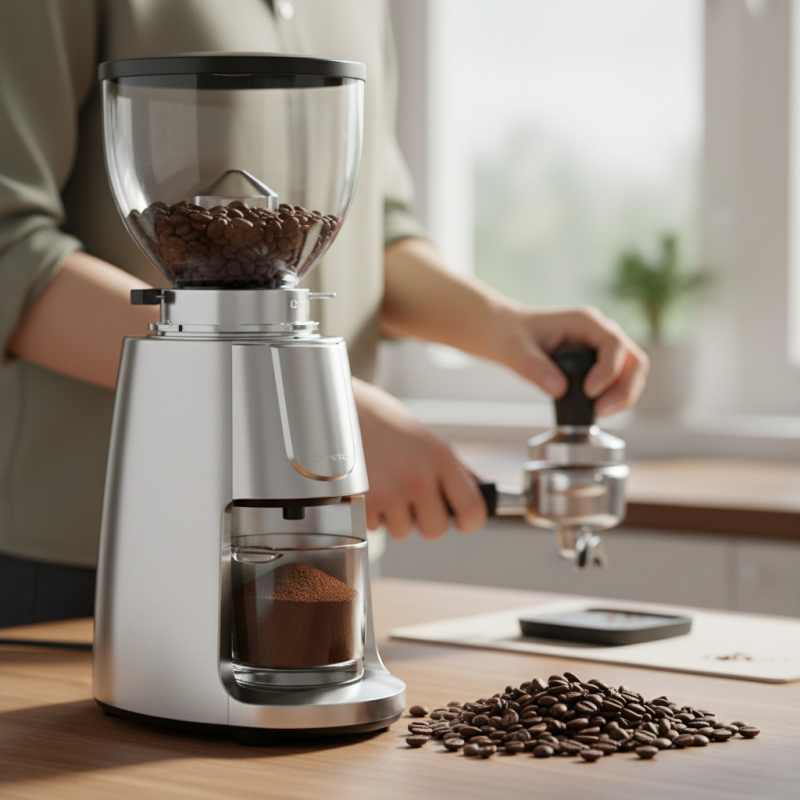
Choosing the right espresso bean grinder is crucial for your coffee experience. An excellent grinder can enhance the flavor and aroma of your espresso. With countless options on the market, finding the best espresso bean grinder may feel overwhelming.
Quality varies significantly among grinders. A cheaper grinder might not deliver the consistency you need for espresso. For instance, blade grinders can produce uneven grinds, impacting the taste. On the other hand, burr grinders offer more precision. Investing in a good burr grinder can elevate your brewing game.
Consider your brewing habits and preferences. Do you enjoy experimenting with different beans? Or do you prefer a straightforward approach? Reflecting on your needs will guide you towards the right choice. Ultimately, the perfect espresso bean grinder should align with your specific coffee goals.
Understanding the Importance of Grinding Fresh Espresso Beans
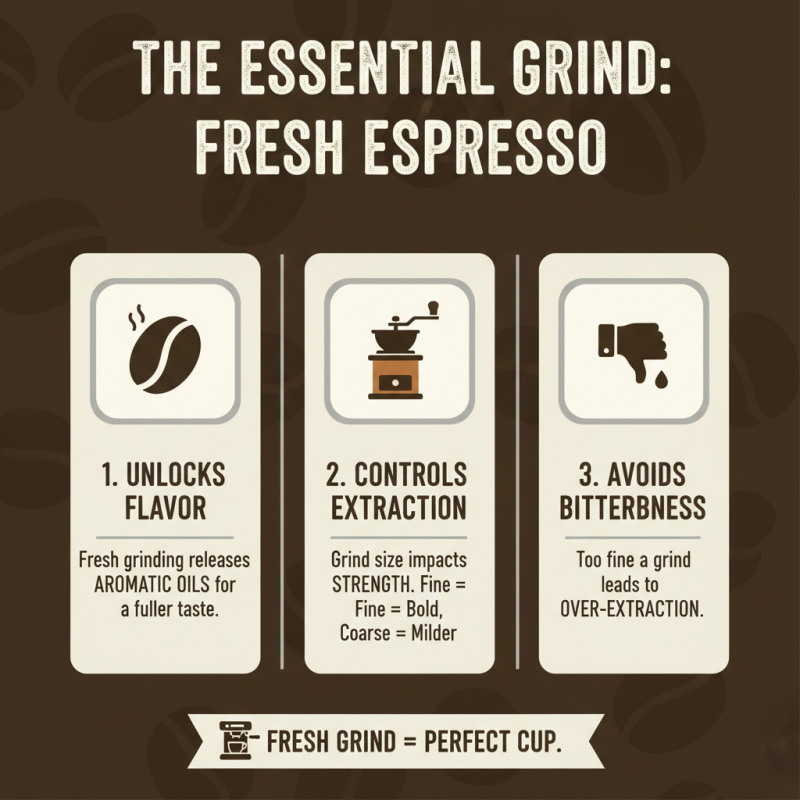
Grinding fresh espresso beans is crucial for achieving the perfect cup. When beans are ground, they release essential oils and aromas. These compounds are vital for flavor. The grind size directly affects the extraction process and taste. A finer grind generally results in a bolder flavor. However, over-extraction can create bitterness.
If the grind is too coarse, you risk under-extraction. The coffee may taste sour and lack depth. Understanding these differences can help you avoid common pitfalls in espresso preparation. Freshly ground beans retain more flavor than pre-ground options. Investing in a quality grinder is key.
Some grinders can produce uneven grinds. This inconsistency can lead to disappointing results. It's essential to assess your grinder regularly. Experiment with different grind settings to find the right balance for your taste. Don't hesitate to make adjustments and taste test along the way. Continuous learning is part of the brewing journey.
Types of Espresso Bean Grinders: Burr vs. Blade
When choosing an espresso bean grinder, it's essential to understand the differences between burr and blade grinders. Burr grinders use two revolving surfaces to crush beans evenly. This method offers a consistent grind, which greatly enhances espresso quality. The grind size can be easily adjusted, making it suitable for various brewing methods.
Blade grinders, on the other hand, chop the beans with a spinning blade. This leads to an uneven grind, which can result in over-extraction or under-extraction in your espresso. They are generally more affordable and can be easier to clean. However, it's important to consider the trade-offs in quality and control.
**Tip:** If you're new to espresso, start with a burr grinder. It provides better consistency and flavor extraction. Also, keep in mind, the grind size impacts brewing. Experiment with your grind to find what works best for your taste.
Consider how often you'll grind beans. A manual burr grinder might suit casual drinkers, while frequent espresso lovers should invest in an electric model. Don’t forget your budget. Investing in a quality grinder pays off with great-tasting espresso. It's crucial to remember that the right grinder can make a world of difference in your coffee experience.
How to Choose the Best Espresso Bean Grinder for Your Needs? - Types of Espresso Bean Grinders: Burr vs. Blade
| Type of Grinder |
Grind Consistency |
Ease of Use |
Price Range |
Maintenance |
| Burr Grinder |
Very Consistent |
Moderate |
$50 - $500 |
Requires Regular Cleaning |
| Blade Grinder |
Inconsistent |
Easy |
$20 - $100 |
Minimal Maintenance Needed |
Key Features to Consider in an Espresso Grinder
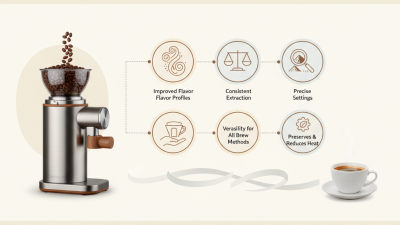
Choosing the right espresso bean grinder is crucial for coffee lovers. Several key features significantly impact the grinding process. One critical aspect is grind size consistency, which ensures even extraction during brewing. Research indicates that uneven grinds can lead to bitter or sour flavors in your espresso. A grinder with 20-25 microns precision can enhance flavor profiles significantly.
Another essential feature is the type of grinder mechanism. Burr grinders generally provide better consistency than blade grinders. Studies show that burr grinders produce fewer heat fluctuations, preserving the delicate oils in coffee beans. Heat can alter the flavor, so keeping temperatures stable is vital.
A grinder's capacity also matters. Smaller grinders may require frequent refills, reducing convenience. On average, a grinder with a capacity of about 250 grams can handle multiple servings without interruption. In contrast, larger models offer more flexibility for those brewing in bulk. Fine-tuning these features can be challenging, but the effort often results in a superior espresso experience.
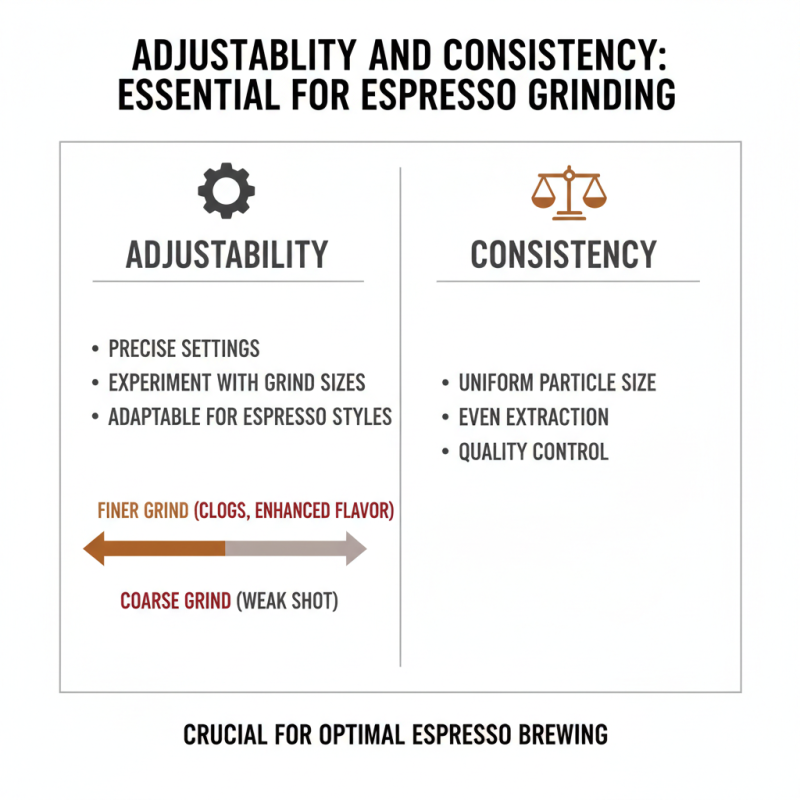
Adjustability and Consistency: Essential for Espresso Grinding
When selecting an espresso bean grinder, adjustability and consistency are crucial factors. A grinder that offers precise settings allows you to experiment with various grind sizes. This adaptability is vital for brewing different espresso styles, ensuring the right extraction. For instance, a finer grind enhances flavor but can clog the machine. Conversely, a coarser grind may result in a weak shot.
Consistency is equally important. Inconsistent grounds lead to uneven extraction. This can produce a bitter or sour brew. Look for grinders that can maintain a uniform grind over time. Consider the build quality of the grinder as well; durable materials contribute to consistent performance. Grinders with high-quality burrs often produce better results than blade grinders.
Reflect on your needs. The perfect grinder should make the task easier, not more complicated. Experimentation might be needed to find your ideal settings. It could take a few tries to perfect your espresso. Embrace the process; every cup offers a new opportunity to learn and refine your technique.
Budgeting for Quality: Finding the Right Grinder for Your Needs
When selecting an espresso bean grinder, the budget plays a pivotal role. Reports indicate that a reliable grinder can significantly impact the flavor profile of your espresso. Investing in a quality grinder ensures you extract the maximum flavor from your beans. Research by the Specialty Coffee Association shows that grinders contribute up to 70% of your coffee’s final taste.
Consider your brewing frequency. If you’re making espresso daily, a burr grinder is worth the investment. Look for models that offer consistency in grind size. This is crucial for espresso shots, as uneven grinds lead to bitter or sour tastes. Remember, even within a budget, it’s possible to find suitable options that balance quality and affordability.
**Tip:** Always check the grinder's burr material. Steel burrs tend to be more durable than ceramic ones.
Think about the amount of coffee you brew. For occasional users, a compact grinder suffices. Heavy users may prefer larger, commercial-grade models. It’s also vital to review user feedback and expert reviews. Many affordable models receive mixed reactions, so take time to evaluate both pros and cons.
**Tip:** Use user reviews to gauge long-term reliability. Frequent breakages in budget models reflect potential downsides.
Espresso Grinder Choices Based on Price and Features
This chart compares the average prices of three different types of espresso grinders: entry-level, mid-range, and high-end. Understanding the cost associated with each category can help you make an informed decision based on your budget and quality requirements.