2026 How to Choose the Best Small Coffee Grinder?
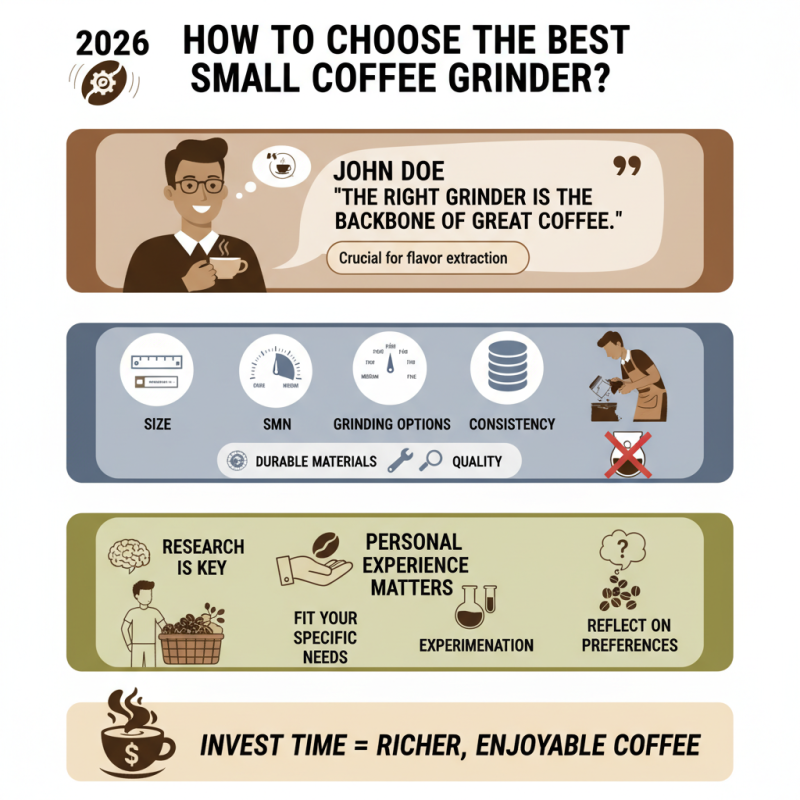
Choosing the best small coffee grinder can significantly enhance your brewing experience. John Doe, a renowned coffee expert, once said, “The right grinder is the backbone of great coffee.” This highlights the crucial role of a small coffee grinder in achieving the perfect flavor extraction.
When selecting a small coffee grinder, consider size, grinding options, and consistency. Many models promise efficiency, yet not all deliver. A quality grinder creates uniform grounds, which directly affects extraction. Look for durable materials; they often indicate reliability. Remember, even skilled baristas face challenges with subpar grinders.
Value true expertise. Research is key. Reviews help, but personal experience matters too. A small coffee grinder should fit your specific needs. Experimentation plays a role in finding the ideal match. Reflect on your preferences—a narrow focus can sometimes lead to missed opportunities. Ultimately, investing time in this decision pays off in richer, more enjoyable coffee.
Understanding the Importance of a Quality Coffee Grinder
A quality coffee grinder plays a crucial role in brewing exceptional coffee at home. When coffee beans are ground, they release oils and flavors that greatly influence the final taste. An inferior grinder may produce uneven grounds, leading to inconsistent extraction. This can result in bitter or bland cups, leaving you disappointed.
Understanding the mechanics of grinding is essential. A good grinder allows for better control over grind size, which is key for different brewing methods. For instance, a fine grind is necessary for espresso, while a coarser grind works best for French press. This versatility enhances your coffee experience. However, it is easy to overlook the need for a reliable grinder amidst the excitement of choosing coffee beans.
Investing in a well-made grinder reflects your commitment to quality coffee. Yet, not all grinders are created equal. Many people struggle with the decision between blade and burr grinders. Blade grinders can be quick and easy, but they often result in uneven particles. Burr grinders, though typically more expensive, offer precision and consistency. The choice can shape your daily coffee ritual. Proper research and understanding of your needs will lead to better decisions in the long run.
Comparison of Coffee Grinder Types
This chart illustrates the popularity of different types of coffee grinders based on user preferences. Burr grinders are recognized as the most popular choice for their quality, while blade grinders tend to be less favored. Understanding these preferences can help you choose the best small coffee grinder for your needs.
Types of Small Coffee Grinders: Burr vs. Blade
When choosing a small coffee grinder, understanding the types available is crucial. The two main types are
burr grinders and
blade grinders.
Burr grinders utilize two revolving surfaces to crush the coffee beans evenly. This method ensures a
consistent grind size, which is vital for flavor extraction. According to a report by the
Specialty Coffee Association, a consistent grind can enhance coffee flavor by up to
30%. Many coffee enthusiasts prefer this method for its reliability.
In contrast, blade grinders chop beans using a spinning blade. While they are generally less expensive and
more portable, they come with their downsides. The grind size varies significantly, leading to an
uneven extraction during brewing. Research shows that over
40% of coffee drinkers might not notice the difference in
flavor, but the variability affects brew quality. This inconsistency can be frustrating for those who
appreciate the nuances of specialty coffee.
When selecting a grinder, think about your brewing method. For espresso or pour-over techniques, a
burr grinder is often a better choice. The precision it offers
leads to a more refined cup. On the other hand, if you’re brewing with a
French press, a blade grinder may suffice. However, the
trade-off is important to consider. Finding the balance between cost, portability, and
grind consistency is essential.
Key Features to Consider When Choosing a Small Coffee Grinder
When selecting a small coffee grinder, several key features deserve your attention. Start with the grinder type. There are blade grinders and burr grinders. Blade grinders are usually cheaper but can result in uneven grinds. Burr grinders provide a more consistent grind size, which is essential for brewing quality coffee.
Next, consider the grinding capacity. Some grinders can only handle small amounts at a time. Think about your coffee consumption. Do you brew one cup or a whole pot? Also, look for adjustable grind settings. This feature allows you to choose the grind size, from fine for espresso to coarse for French press.
Ease of cleaning is often overlooked. A grinder that disassembles easily can save you time and hassle. Look for models with removable parts. Durability is also crucial. Many cheaper models have a short lifespan. It's worth investing in a grinder that will last. Balancing these factors can aid in making a better choice for your coffee journey.
How Grind Size Affects Coffee Flavor and Brew Method
The grind size of your coffee beans plays a crucial role in the final flavor of your brew. A coarse grind is ideal for methods like French press. It allows for longer extraction times, resulting in a rich, bold flavor. Conversely, a fine grind works best for espresso. The smaller particles offer a quick extraction, leading to a concentrated and intense shot.
Different brewing methods require specific grind sizes. If you use a pour-over technique, a medium grind is essential. It balances flavor extraction and flow rate, ensuring a smooth cup. However, inconsistency in grind size can lead to unexpected results. A few uneven particles can cause bitterness or weak spots in your coffee.
Choosing the right grinder is just as important as selecting the beans. Manual grinders often yield a more consistent size, while electric models can vary. Experimentation is key. You may find that adjusting your grind can greatly enhance your coffee experience. Remember, practice leads to improvement, and sometimes mistakes lead to the best discoveries.
2026 How to Choose the Best Small Coffee Grinder? - How Grind Size Affects Coffee Flavor and Brew Method
| Grind Size |
Flavor Profile |
Best Brew Method |
Grinder Type |
| Coarse |
Bold, Earthy |
French Press, Cold Brew |
Burr Grinder |
| Medium-Coarse |
Balanced, Sweet |
Pour Over, Chemex |
Burr Grinder |
| Medium |
Bright, Complex |
Drip Coffee, Aeropress |
Blade Grinder or Burr Grinder |
| Fine |
Rich, Intense |
Espresso, Moka Pot |
Burr Grinder |
| Extra Fine |
Strong, Syrupy |
Turkish Coffee |
Burr Grinder |
Maintenance Tips for Longevity of Your Small Coffee Grinder
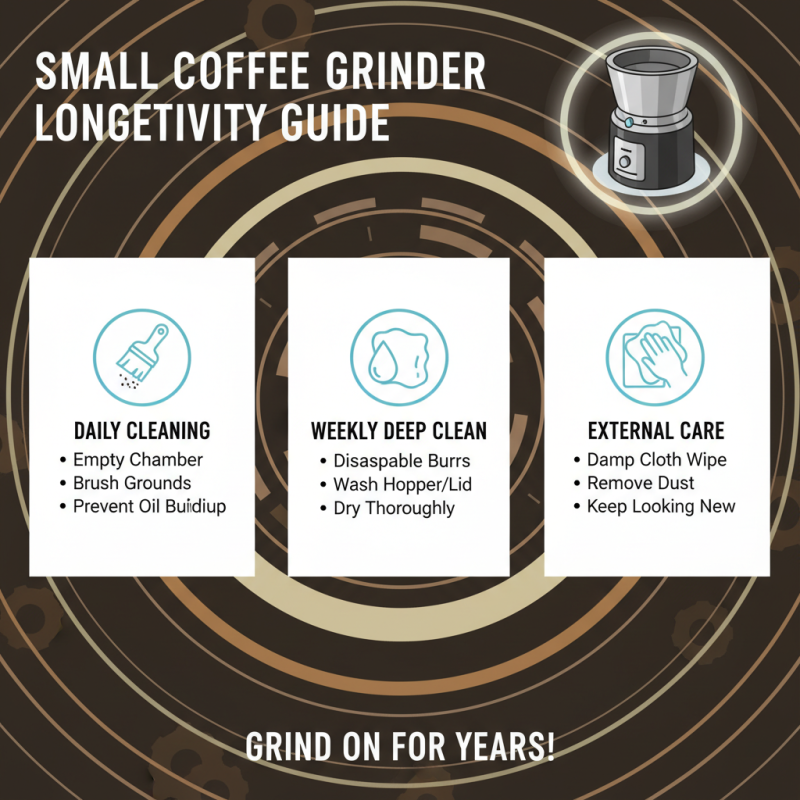
Maintaining your small coffee grinder can greatly extend its lifespan. Regular cleaning is essential. Be sure to remove coffee grounds from the grinder's chamber after each use. Oils from the beans can accumulate, leading to rancidity. Wipe the exterior with a damp cloth to keep it looking fresh and new.
Aside from cleaning, consider the grinder's settings. Adjusting the grind size correctly can prevent excessive straining on the motor. Using the right grind for your brewing method helps, too. Over time, wear and tear may occur. If you notice unusual noises or an inconsistent grind, it might be time to troubleshoot issues or seek repairs.
Keep your grinder in a dry place. Moisture can damage the internal parts. There may be instances when the grinder seems slow or unresponsive, which can be frustrating. Taking apart the grinder occasionally to check for any blockages may be necessary. This hands-on approach can prevent bigger problems later on. Always prioritize safety when handling any electrical appliance.