Top 5 Coffee Bean Grinder Options for Home Brewing?
Brewing the perfect cup of coffee at home begins with the right equipment. One of the most essential tools is a high-quality Coffee Bean Grinder. The grind size can greatly affect the flavor and aroma of your brew. Choosing a suitable grinder requires some thought and research. It may feel overwhelming due to the many options available.
Understanding what makes a grinder effective is crucial. You need a grinder that can produce consistent grind sizes. A well-chosen Coffee Bean Grinder ensures that your beans release their full flavor potential. Many grinders vary in features, price, and usability. This variety leads to a diverse range of experiences.
However, not every grinder will meet your specific needs. Some users find that budget grinders underperform. Others struggle with the complexity of high-end models. Each choice involves a balance of cost, convenience, and performance. It’s important to reflect on these factors while selecting the ideal coffee grinder for your home brewing experience.
Top Features to Consider When Choosing a Coffee Bean Grinder
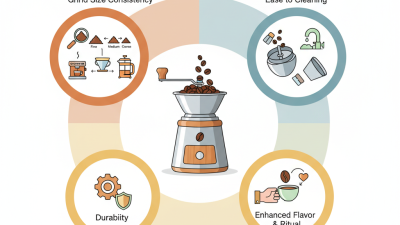
When selecting a coffee bean grinder for home brewing, several features should be considered. Grinding consistency is crucial. A uniform grind size can significantly enhance flavor extraction. According to the National Coffee Association, a precise grind maximizes aroma and taste. Look for grinders that offer adjustable settings to suit different brewing methods.
Another important factor is the grinder type. Burr grinders are often recommended over blade grinders. Burr grinders provide a consistent particle size, unlike blades that can create uneven grounds. It's noted that over 70% of coffee enthusiasts prefer burr grinders for their reliability in delivering consistent results. Weight and size also play a role, especially if you're limited on counter space. Opt for a grinder that fits seamlessly into your kitchen setup.
One common mistake is assuming all grinders are the same. Many consumers overlook the importance of build quality. A durable design can lead to a longer lifespan. Users should also reflect on noise levels. No one wants a loud grinder disrupting the morning routine. Before buying, consider testing the grinder to ensure it meets your expectations. A hands-on approach can often reveal details missed in online reviews.
Types of Coffee Bean Grinders: Burr vs. Blade
When selecting a coffee grinder for home brewing, it's crucial to understand the two main types: burr and blade grinders. Burr grinders crush coffee beans between two revolving elements, ensuring a uniform grind size. This consistency can significantly improve the flavor extraction in your brewing process. Many coffee aficionados prefer burr grinders for this reason. They provide various grind settings, allowing you to tailor your coffee to different brewing methods.
On the other hand, blade grinders are more affordable and easier to find. They use a spinning blade to chop the beans. However, this can lead to uneven grinds, which may affect the quality of your coffee. Some users find that blade grinders produce fine particles and larger pieces simultaneously. This inconsistency can result in over-extraction or under-extraction during brewing, potentially ruining your cup of coffee. It's essential to reflect on your brewing style and preferences when choosing a grinder.
Ultimately, the choice between a burr and blade grinder may depend on your coffee experience and budget. Consider how much effort you're willing to put into your brewing routine. If you're serious about coffee, investing in a burr grinder may yield better results. However, if you're a casual drinker, a blade grinder may suffice for quick and easy preparation.
Best Home Coffee Bean Grinders: A Comparison of Top Models
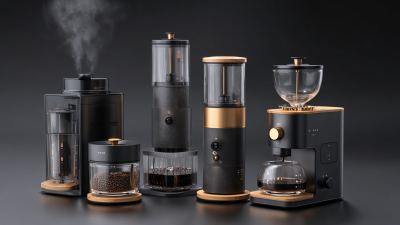
When it comes to brewing coffee at home, selecting the right coffee bean grinder can significantly impact the flavor and aroma of your brew. A recent industry report highlights that nearly 70% of coffee enthusiasts believe freshness is key to an optimal coffee experience. A quality grinder allows you to enjoy the full potential of your beans by preserving their essential oils.
There are two primary types of grinders: blade and burr. Blade grinders are often more affordable, but they tend to produce uneven grinds. This inconsistency can lead to subpar extraction during brewing. In contrast, burr grinders offer a uniform grind size, enabling better flavor extraction. Research indicates that even minor discrepancies in grind size can affect the final taste, making a burr grinder a favorable choice for serious coffee drinkers.
For those new to home brewing, here are a few considerations. Choose a grinder that fits your brewing method. For example, espresso requires a fine grind, while French press needs a coarse grind. Additionally, clean your grinder regularly to avoid stale flavors. Measuring your coffee-to-water ratio can also enhance your overall experience. Remember, even small changes can lead to a more satisfying cup.
Top 5 Coffee Bean Grinder Options for Home Brewing
| Model |
Grind Type |
Capacity |
Grind Settings |
Price Range |
| Burr Grinder A |
Burr |
250 grams |
12 settings |
$50 - $70 |
| Blade Grinder B |
Blade |
150 grams |
Fixed |
$20 - $30 |
| Burr Grinder C |
Burr |
300 grams |
15 settings |
$80 - $100 |
| Manual Grinder D |
Burr |
100 grams |
Stepless |
$30 - $50 |
| Electric Grinder E |
Burr |
200 grams |
10 settings |
$40 - $60 |
How to Maintain Your Coffee Bean Grinder for Longevity
Maintaining your coffee bean grinder is crucial for optimal performance and flavor. Regular cleaning is essential. Coffee oils and fine grounds can accumulate over time, affecting the taste of your brew. A study by the Specialty Coffee Association highlights that a clean grinder can improve extraction efficiency by up to 20%. This means your daily cup can become significantly richer and more flavorful.
Disassembling your grinder for thorough cleaning may seem daunting. However, it is vital for longevity. Use a brush to remove residues from burrs. Avoid abrasive cleaners, as they can damage components. Research shows that grinders well-maintained can last up to 10 years, while neglected ones may only function effectively for half that time.
Finally, consider the environment where you store your grinder. Humidity and heat can degrade the materials over time. The ideal storage temperature is between 60-70°F. Inadequate care can lead to decreased performance and a less satisfying brewing experience. Emphasizing regular maintenance will not only enhance your coffee but also extend the life of your grinder, making each brew enjoyable.
Tips for Brewing Perfect Coffee with Ground Beans
Brewing perfect coffee starts with the right grind. Freshly ground beans release flavors that pre-packaged coffee simply cannot match. When grinding, ensure your beans are uniform in size. Inconsistent grounds can lead to uneven extraction. Pay attention to your coffee-to-water ratio. A general guideline is about two tablespoons of coffee for every six ounces of water.
Experimenting with brewing times can greatly influence taste. Too short, and the coffee might taste sour. Too long, and it could turn bitter. Consider using a timer to keep track of your brewing process. Coffee is sensitive to temperature too. Ideal water temperature is typically between 195°F and 205°F. A thermometer can help you avoid over or under-extracting your coffee.
Don’t hesitate to adjust your grind size based on your brewing method. A coarser grind works well for French press, while a fine grind suits espresso. Learning from each brew can improve your technique. Embrace the trial and error aspect of coffee brewing. Each cup becomes a step toward your ideal flavor profile.