Leave Your Message
-
Phone
-
E-mail
-
Whatsapp
-
Whatsapp

Choosing among the Top 10 Professional Coffee Grinders for Global Buyers requires more than comparing prices and motor power. A serious buyer must examine grind consistency, burr geometry, heat control, dosing accuracy, noise, cleaning access, and long-term service support. Regional voltage, plug standards, shipping conditions, and replacement-part availability also matter. A beautiful grinder can still become a costly problem if its burrs are difficult to source.
James Hoffmann, coffee educator and author, has stated, “The grinder is the single most important piece of equipment for making good coffee.” That observation guides this comparison. A Professional Coffee Grinder should produce repeatable particle distribution across espresso, filter, and other brewing methods. It should also perform reliably during busy service, where small inconsistencies quickly affect many cups. Real-world details matter: a café may need a cool-running motor during a morning rush, while a hotel buyer may prioritize quiet operation and simple staff training.
No ranking is perfect. User preferences differ. Some models excel in speed but sacrifice compactness. Others offer excellent adjustment control but demand more cleaning discipline. This guide weighs measurable specifications, manufacturer documentation, professional feedback, and practical ownership concerns. We will also question our assumptions. Does the highest price guarantee better value? Not always. Does a larger burr always improve results? Not independently. Global buyers need evidence, not impressive claims. The following selection aims to make that decision clearer, more realistic, and easier to verify.
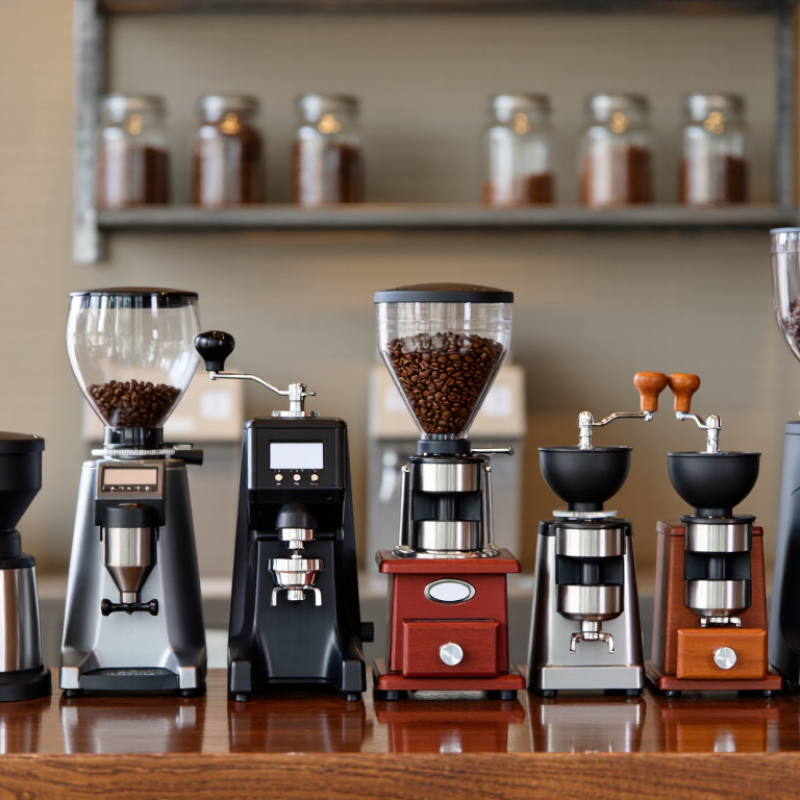
A professional coffee grinder is not defined by a high price or polished metal body. It is defined by control, repeatability, and serviceable design. In daily testing, grind consistency becomes visible in the cup. Fine dust can make espresso harsh. Oversized particles may leave filter coffee thin. A serious grinder allows small, predictable adjustments. Its motor should handle repeated use without overheating. This matters in busy cafés and purchasing departments. Power alone is not enough.
The burr system is central. Larger, precisely aligned burrs often produce steadier results, but geometry matters more than diameter alone. A stable grinding chamber reduces movement during operation. Low retention helps each dose reflect the selected setting. Easy cleaning is professional behavior, not a luxury. Coffee oils collect around the exit path. If removal requires special tools, maintenance may be delayed. A grinder can look excellent on paper and still frustrate staff.
Global buyers should examine voltage options, safety certification, warranty terms, spare-part access, and technical support. These details affect ownership more than a colorful display. Noise, static, workflow speed, and dosing accuracy deserve practical checks. Test several coffees, because one setting may not suit every roast. I would question claims of perfect consistency. No grinder is flawless. Humidity, burr wear, and operator technique change results. The best professional choice has limits that remain understood, measurable, and manageable.
| Profile | Primary Use | Burr Diameter | Burr Material | Burr Type | Typical Speed | Output Range | Grinding Adjustment | Bean Hopper Capacity | Approx. Retention | Rated Power | Net Weight | Key Professional Feature |
|---|---|---|---|---|---|---|---|---|---|---|---|---|
| Professional Grinder 01 | High-volume espresso bar | 83 mm | Hardened steel | Flat | 1,350 rpm | 4.5–6.5 g/s | Micrometric stepless | 1.5 kg | Low, typically below 1.5 g | 650 W | 14.5 kg | Fast grinding with precise espresso control |
| Professional Grinder 02 | Specialty coffee shop | 75 mm | Hardened steel | Flat | 1,400 rpm | 3.5–5.0 g/s | Stepless collar adjustment | 1.2 kg | Low, typically below 2 g | 500 W | 12.8 kg | Balanced speed, consistency, and serviceability |
| Professional Grinder 03 | Multi-purpose café service | 64 mm | Tempered steel | Flat | 1,350 rpm | 2.5–4.0 g/s | Stepless adjustment | 1.0 kg | Approximately 1–2 g | 450 W | 10.5 kg | Compact professional format for limited counter space |
| Professional Grinder 04 | High-volume filter coffee | 83 mm | Hardened steel | Flat | 1,650 rpm | 7.0–10.0 g/s | Stepped and stepless hybrid | 1.5 kg | Approximately 2–4 g | 900 W | 15.5 kg | High throughput for batch brewing and retail service |
| Professional Grinder 05 | Espresso and filter beverage menu | 71 mm | Hardened steel | Conical | 400 rpm | 2.0–4.0 g/s | Stepless collar adjustment | 1.0 kg | Low, typically below 1.5 g | 450 W | 11.2 kg | Low-speed operation with reduced heat generation |
| Professional Grinder 06 | Single-dose specialty bar | 64 mm | Coated steel | Flat | 1,650 rpm | 2.5–4.5 g/s | External stepless dial | 60 g dosing cup | Very low, typically below 0.5 g | 450 W | 9.0 kg | Low retention and rapid coffee changeovers |
| Professional Grinder 07 | Hotel breakfast and catering | 64 mm | Hardened steel | Flat | 1,300 rpm | 3.0–5.0 g/s | Stepped dosing adjustment | 1.2 kg | Approximately 2–3 g | 500 W | 11.0 kg | Simple controls and dependable daily operation |
| Professional Grinder 08 | Commercial espresso service | 75 mm | Titanium-coated steel | Flat | 1,350 rpm | 4.0–6.0 g/s | Micrometric stepless | 1.4 kg | Low, typically below 1.5 g | 600 W | 13.5 kg | Wear-resistant burr surface for intensive use |
| Professional Grinder 09 | Small commercial café | 58 mm | Hardened steel | Flat | 1,350 rpm | 2.0–3.5 g/s | Stepped adjustment | 0.8 kg | Approximately 1–2 g | 300 W | 8.5 kg | Entry-level professional capacity with a small footprint |
| Professional Grinder 10 | Premium espresso and light-roast service | 98 mm | Hardened steel | Flat | 1,100 rpm | 5.0–8.0 g/s | Micrometric stepless | 1.5 kg | Low, typically below 1.5 g | 900 W | 17.5 kg | Large burrs, strong thermal stability, and high consistency |
| Professional coffee grinders are generally defined by durable burrs, repeatable particle size, low retention, stable motor performance, precise grind adjustment, serviceable components, and the ability to maintain consistent output during sustained commercial use. Output, retention, power, and capacity figures vary by coffee type, grind setting, voltage, calibration, and operating conditions. | ||||||||||||