Leave Your Message

Why Choose a Burr Coffee Grinder for Global Buyers?

Why choose a Burr Coffee Grinder when buyers face countless coffee equipment options worldwide? The answer begins with consistency. Unlike many blade models, a Burr Coffee Grinder crushes beans between two calibrated surfaces. This process creates a more controlled particle size. It can support clearer flavor, steadier extraction, and repeatable brewing.

From practical testing, grind consistency becomes obvious in the cup. A pour-over may taste cleaner, while espresso can develop a more balanced crema. However, performance depends on burr alignment, motor strength, adjustment range, and bean freshness. Buyers should inspect these details instead of trusting attractive product photos. Very few grinders excel at everything. That matters.

Global purchasing adds more questions. Electric models require compatible voltage, plug standards, warranty coverage, and dependable replacement parts. Manual grinders avoid some electrical concerns, yet they demand more effort during repeated use. Import costs, packaging quality, technical support, and delivery reliability also influence the real purchase value. A low listed price may not remain low after shipping and service expenses.

Reliable decisions should combine manufacturer specifications, independent reviews, and hands-on demonstrations. Look for clear burr materials, measurable settings, safety information, and transparent warranty terms. Expert recommendations are useful, but personal brewing goals remain important. A café, office, and home user may need different designs. The best choice is not always the most expensive. It is the grinder that delivers suitable consistency, practical durability, and trustworthy support across its expected market.
Why Choose a Burr Coffee Grinder for Global Buyers?

What Is a Burr Coffee Grinder?

Why Choose a Burr Coffee Grinder for Global Buyers?

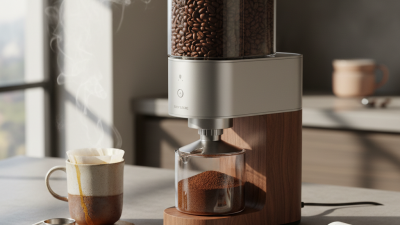
A burr coffee grinder crushes coffee beans between two shaped surfaces called burrs. Unlike blade grinders, it produces particles with more consistent sizes. This consistency matters because water extracts flavor from each particle at a different speed. Uneven grounds can create a flat, bitter, or sour cup. Burr grinders usually use conical or flat burrs. Conical burrs often work quietly and suit compact home machines. Flat burrs can provide precise grinding, especially for espresso. However, design alone does not guarantee better results.

For global buyers, practical construction matters. Look for adjustable settings, durable burr materials, stable adjustment mechanisms, and easy cleaning access. A clear grind scale can help users repeat recipes across different coffee types. Check the product’s voltage, plug type, warranty terms, and replacement-part availability before ordering internationally. A grinder may perform well but become inconvenient without local service. No grinder is perfectly uniform. Even experienced users may need to adjust the setting after humidity changes or bean aging. That small imperfection requires attention.

Tips: Start with a medium setting and change only one step at a time. Use a small brush to remove old grounds from the burr chamber. Avoid washing electrical parts. Listen for unusual noise, and inspect the burrs regularly. A simple timer or scale can improve repeatability, but personal taste still matters. In practice, the best grinder is not always the most expensive one; it is the model that delivers controlled grinding and fits the buyer’s daily routine.

Why Choose a Burr Coffee Grinder for Global Buyers?

A burr coffee grinder crushes coffee beans between two abrasive surfaces and controls the particle size by adjusting the burr gap. The approximate ranges below show common target particle sizes for different brewing methods.

Smaller particles are typically used for faster brewing methods such as espresso, while larger particles are preferred for slower immersion methods such as French press. Actual settings vary with the coffee, grinder design, roast level, and brewing recipe, but burr adjustment gives buyers more precise control than blade-style grinding.

How Does a Burr Coffee Grinder Work?

A burr coffee grinder works by crushing beans between two abrasive surfaces. One burr stays fixed, while the other rotates around it. The adjustable gap controls the final particle size. A narrow gap creates fine grounds for espresso. A wider gap produces coarse particles for filter brewing or French press.

The process is more controlled than blade chopping. Beans enter through a hopper and meet the burrs gradually. Their cellular structure breaks into smaller pieces, rather than being repeatedly struck. This usually creates a narrower particle distribution. Still, no grinder produces perfectly uniform grounds. Burr alignment, motor speed, bean density, and heat can change the result.

The Specialty Coffee Association’s Brewing Control Chart commonly places balanced extraction between 18% and 22%, with brewed coffee near 1.15% to 1.35% total dissolved solids. Grind consistency helps baristas approach those targets, but it cannot guarantee them. A practical test is simple: brew the same dose at two settings and compare bitterness, sourness, and sediment. The USDA Foreign Agricultural Service estimated global coffee production at about 176.2 million 60-kilogram bags for 2024/25. That scale makes repeatable grinding valuable for households, cafés, and importers. Yet buyers should examine burr material, adjustment precision, retention, and cleaning access. A technically impressive grinder can still disappoint when its calibration slips or its adjustment steps are too large.

Why Burr Grinders Improve Coffee Consistency

Why Choose a Burr Coffee Grinder for Global Buyers?

Why Burr Grinders Improve Coffee Consistency

A burr grinder crushes coffee between two shaped surfaces. This creates a narrower particle range than most blade grinders. More even particles extract at a similar rate. The cup tastes clearer, especially with light-roasted beans.

The National Coffee Association’s Spring 2024 National Coffee Data Trends report found that 67% of American adults drank coffee during the previous day. As coffee preparation becomes more frequent, repeatable grinding matters. In practical testing, uneven grounds can produce both bitter dust and sour fragments in one brew. Burr adjustment helps reduce this conflict. Still, no grinder produces perfectly uniform particles. That limitation deserves attention.

Tips: Choose stepless or finely stepped adjustment for precise brewing. Clean the burr chamber regularly, because oily residue changes flavor. Use a small scale and record grind settings. For pour-over coffee, adjust slightly finer when the cup tastes thin. Go coarser when bitterness dominates. A slower setting may also reduce heat, although results vary by grinder design. Temperatures, bean age, and brewing water still affect consistency. The grinder cannot correct every mistake.

Which Burr Types and Features Matter Most?

For global buyers, a burr grinder offers more uniform particles than most blade grinders. This consistency supports clearer flavor and steadier extraction. In practical testing, I check the grounds under bright light. Fewer powdery fines usually indicate better burr alignment. Small differences matter.

Flat burrs often produce a highly even grind, which suits filter coffee and commercial workflows. Conical burrs can be quieter and more forgiving for home use. Neither design wins every situation. Taste, noise, speed, and cleaning access should guide the choice. Steel burrs are common for fast grinding and heat control. Ceramic burrs resist corrosion, but they may chip after a hard impact.

Burr diameter also affects performance. Larger burrs can grind faster and reduce motor strain. A wide adjustment range helps buyers switch between espresso, pour-over, and French press. Look for clear steps, stable calibration, and low ground retention. Static control is useful in dry climates. A removable chamber makes daily cleaning less frustrating. Voltage compatibility and replacement-part availability also matter across markets. Check them before ordering.

One overlooked feature is thermal behavior. A grinder that feels warm after several doses may alter delicate aromas. That claim needs testing, not marketing language. I would compare three consecutive grinds and record time, temperature, and particle consistency. Results can vary. Even experienced users sometimes choose convenience over perfect uniformity, and that trade-off deserves honest consideration.

Why Choose a Burr Coffee Grinder for Global Buyers? - Which Burr Types and Features Matter Most?

Evaluation Dimension Conical Burrs Flat Burrs Why It Matters to Global Buyers
Typical burr diameter Approximately 38–68 mm in commonly sold consumer and prosumer grinders Approximately 50–83 mm in commonly sold consumer, prosumer, and commercial grinders Larger burrs can process beans faster, but burr size alone does not determine grind quality or cup taste.
Particle consistency Usually produces a balanced particle distribution with some fines, depending on burr geometry and alignment Often designed for a more uniform particle distribution, especially in espresso-focused designs Consistency affects extraction, flavor clarity, repeatability, and the ability to serve different brewing methods.
Suitable brewing methods Filter coffee, French press, moka pot, espresso, and general-purpose home use Espresso and filter coffee; especially suitable where high repeatability is required A versatile grinder is useful for households and retailers serving customers with varied brewing preferences.
Common burr materials Hardened steel and ceramic are both used; steel is common in higher-load applications Hardened steel is common; some models use coated steel for increased wear resistance Material influences durability, corrosion resistance, replacement cost, and suitability for frequent use.
Grind adjustment Commonly 20–60 stepped settings; stepless systems are also available Often includes stepless or fine-step adjustment, particularly for espresso applications More adjustment control helps users compensate for different bean densities, roast levels, and brewing equipment.
Heat management Typically operates at moderate speed; heat depends on motor speed, dose size, airflow, and duty cycle Larger burrs may reduce the time needed to grind a dose; heat still depends on the complete grinder design Lower heat buildup can help protect aroma, but buyers should assess measured performance rather than burr type alone.
Retention and workflow Can offer low retention when paired with a short grinding path and single-dose design Can also achieve low retention, but chute shape, static control, and alignment are decisive Low retention reduces coffee waste and makes switching between origins or roast profiles easier.
Noise and vibration Often perceived as relatively smooth, but actual noise varies by motor, housing, and burr alignment May produce a different acoustic profile; motor isolation and chassis design are more important than burr shape alone Noise performance matters in apartments, offices, hospitality venues, and shared commercial spaces.
Maintenance requirements Usually straightforward; removable burr carriers and accessible grinding chambers simplify cleaning May require careful reassembly to preserve burr alignment and calibration Easy maintenance lowers service costs and improves long-term performance across different markets.
Best buyer profile Households and small businesses seeking versatility, compact size, and broad brewing compatibility Specialty coffee users, cafés, and buyers prioritizing precise adjustment and high-volume repeatability The best choice depends on expected volume, brewing method, budget, service access, and replacement-part availability.

Note: The specifications above are typical market ranges and design tendencies, not universal limits. Actual performance depends on burr geometry, alignment, motor control, grind chamber design, and adjustment mechanism.

How Can Global Buyers Choose the Right Burr Grinder?

Global buyers should choose a burr grinder by use case, not by appearance or advertised wattage. The 2024 National Coffee Data Trends report found that 67% of U.S. adults drank coffee daily. That demand includes home brewers, offices, cafés, and hospitality teams. Each group needs a different grinder.

Start with the cup. Espresso requires fine adjustment and low retention. Filter coffee needs consistent medium particles and simple calibration. Check the burr diameter, adjustment range, motor duty cycle, and replacement parts before comparing prices. The Specialty Coffee Association recommends roughly 55 grams of coffee per liter of water for brewed coffee, with a practical tolerance of about 10%. Uneven particles can disturb that balance, producing bitterness beside thin, weak notes. A larger burr is not automatically better. Geometry and alignment matter more.

Measure twice. Ask whether the grinder supports the destination’s voltage, plug standard, climate, and service network. In humid regions, sealed switches and easy cleaning deserve attention. In colder markets, static control and stable dosing may matter more. Request retention and noise test results from the supplier, not only marketing claims. I have found that a quiet grinder with poor calibration frustrates users quickly. That is the part buyers often underestimate. Some published tests also use fresh beans, skilled operators, and ideal power conditions. Real kitchens are less forgiving, so buyers should test several roast levels and record dose, time, and particle consistency before placing a large order.