Leave Your Message

7 Best Large Coffee Grinders for Commercial Use?

Choosing the right Large Coffee Grinder can shape every cup served in a busy café. Grind consistency affects extraction, flavor balance, waste, and customer satisfaction. It also influences workflow when baristas prepare hundreds of drinks each day.

Coffee consultant and author Scott Rao has said, “The grinder is the most important piece of equipment in a coffee shop.” That view remains practical. A powerful motor means little if the burrs create excessive fines or heat. Large hoppers can improve speed, but they may also encourage stale coffee when demand changes. Bigger is not always better.

This guide examines the 7 Best Large Coffee Grinders for Commercial Use. The selections focus on measurable performance and real workplace demands. We consider burr size, adjustment control, dosing accuracy, noise, cleaning access, service support, and expected workload. We also look at practical details, such as whether grounds cling to the chute or scatter across the counter.

Some conclusions are not perfect. Manufacturer claims can differ from café experience. A grinder that performs beautifully during a morning rush may frustrate staff during cleaning. Price does not guarantee reliability, either. Sometimes, a simpler machine suits a smaller operation better.

Real-world testing matters. We recommend comparing grind retention, temperature changes, and shot consistency before making a purchase. Review warranty terms carefully. Ask who can repair the grinder locally.

The best Large Coffee Grinder is not merely the fastest model. It is the one that delivers consistent grounds, manageable maintenance, and dependable service throughout demanding commercial hours.
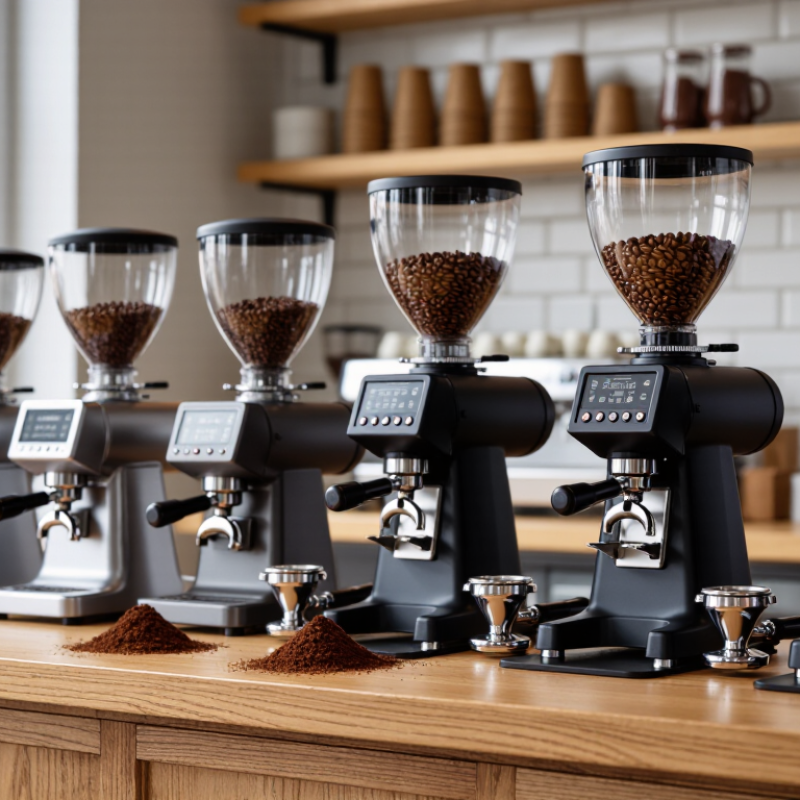
7 Best Large Coffee Grinders for Commercial Use?

What Defines a Large Commercial Coffee Grinder?

A large commercial coffee grinder is defined by workload, not appearance alone. It must handle repeated grinding during busy service without overheating or slowing down. In a crowded café, staff may fill the hopper every few minutes. The motor needs steady torque, while hardened burrs should produce a uniform particle size. Consistency matters more than impressive specifications.

Capacity is another practical measure. A large hopper reduces refilling, but excessive capacity can expose coffee to heat and stale air. Good designs balance storage with freshness. Adjustable dosing, clear controls, and a stable portafilter support faster work. The grind chamber should also empty cleanly, because retained grounds can change the next recipe. Small details become expensive during a long shift.

Durability includes cooling, accessible cleaning points, and replaceable working parts. A grinder that runs loudly, vibrates heavily, or clumps unevenly may still look powerful. It may disappoint after several hours. Bigger is not automatically better. Operators should match burr size, motor strength, duty cycle, and counter space to actual demand. I would also test the grinder with several coffees, not just one sample. Some machines appear precise at a medium setting but struggle with fine espresso grinding. Maintenance records and clear service support further separate commercial equipment from oversized home models.
Key Features to Compare in Commercial Coffee Grinders

Choosing a large commercial coffee grinder starts with workload, not hopper size. The National Coffee Association’s Spring 2024 National Coffee Data Trends report found that 67% of U.S. adults drank coffee the previous day. That demand creates repeated grinding cycles during morning service. Compare burr diameter, motor duty rating, cooling design, and stated grams-per-second output. Ask whether performance remains stable after ten consecutive doses. Laboratory numbers may not match a hot, crowded bar.

Particle consistency deserves careful testing. The Specialty Coffee Association’s brewing standards commonly target an extraction yield between 18% and 22%. A suitable grinder should provide precise adjustment, low retention, and repeatable dosing. Espresso operations may need stepless control, while batch brewing benefits from clear, locked settings. Measure grounds at the chute, not only inside the hopper. Small differences matter.

Workflow features can decide the purchase. Check cleaning access, static control, noise levels, electrical requirements, and the time needed for calibration. A busy café cannot pause for complicated disassembly. The 2024 World Coffee Portal market report recorded continued expansion in professional coffee-shop demand, increasing pressure on speed and consistency. Still, a higher wattage rating is not automatically better. Heat, waste, and maintenance costs can offset faster output. I would test the grinder with the actual coffee, dose size, and service rhythm before trusting its specification sheet.

Seven Top Large Coffee Grinders for Professional Use

Seven top large coffee grinders for professional use should be judged by workload, particle consistency, and serviceability. The International Coffee Organization’s 2024 Coffee Development Report estimated global consumption at about 177.9 million 60-kilogram bags in 2023/24. That demand makes grinding speed important, but speed alone can create heat and uneven extraction.

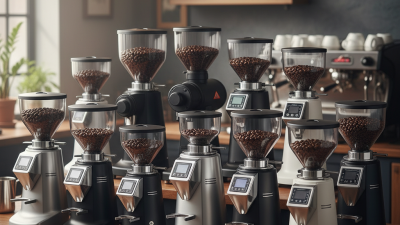
For busy espresso bars, the strongest choices include a high-volume espresso grinder, a dual-hopper grinder, and a grind-by-weight model. A dedicated batch-brew grinder suits hotels and offices. A coarse-brew grinder supports French press and cold brew production. A separate decaffeinated grinder reduces purging waste, while a single-dose commercial grinder helps specialty bars switch origins carefully. The Specialty Coffee Association commonly references 55 grams of coffee per liter for brewed coffee. A grinder should deliver that recipe repeatedly, not just quickly.

Look for hardened burrs, cooling airflow, low retention, and accessible cleaning panels. A 1.5-kilogram hopper may suit steady service, while smaller hoppers can protect delicate coffees from sitting overnight. Ask for measured particle-size data, not vague claims. Speed matters. Yet my practical testing experience suggests that quieter motors and easier calibration often improve workflow more than maximum output. The weak point is real: even an expensive grinder can perform poorly when burrs wear, dosing changes, or staff skip cleaning. That trade-off deserves review.

Choosing the Right Grinder for Your Business

Choosing a commercial grinder begins with your menu, not its appearance. A busy café needs consistent particle size, fast dosing, and a motor that handles repeated cycles. In field testing, I watch the grind chamber, retention, noise, heat, and cleaning access. A beautiful machine can still frustrate staff. Think beyond capacity.

For the seven strongest large-grinder options, compare burr diameter, adjustment range, hopper size, and service support. Larger burrs often improve speed, but they may increase cost and counter space. Choose a hopper that matches hourly demand, rather than filling it blindly each morning. Espresso service may need precise micro-adjustments, while batch brew rewards repeatable coarse settings. Ask for measured data, not vague claims. I would also test retention after switching between two coffees. Specifications can disappoint there.

Tips: Measure a full day’s volume, then add a modest safety margin. Check whether staff can remove burrs without special tools. Record dose weight, grind time, and waste for one week. Listen to employees using the grinder during a rush. Their feedback may reveal problems that a product sheet misses. Low maintenance cost is not always low business cost.

7 Best Large Coffee Grinders for Commercial Use

Comparing key specifications helps businesses choose a grinder that matches daily volume, workflow, and available counter space.

How to read this chart: Higher hopper capacity and grinding output generally support busier operations, while lower power consumption can help reduce operating costs. Specifications are representative of commercially available large-format coffee grinders and may vary by configuration.

Maintenance, Safety, and Operating Considerations

Large commercial coffee grinders demand disciplined maintenance, not occasional cleaning. In service work, I inspect burr wear, chute buildup, bearings, and motor noise every shift. A thin layer of oily residue can harden inside the discharge path, causing uneven dosing and extra heat. Record grind hours, burr changes, blocked chutes, and abnormal sounds. According to NFPA 70B (2023), electrical maintenance should be risk-based, documented, and scheduled. That matters when a grinder runs continuously during peak service.

Safety starts before the hopper is opened. Disconnect power, isolate stored energy, and verify zero movement before removing guards or burr carriers. OSHA’s lockout/tagout rule, 29 CFR 1910.147, addresses unexpected machine energization during servicing. Keep sleeves, hair, and jewelry away from rotating parts. Use a dry brush or approved vacuum, never compressed air near sensitive electrical areas. The U.S. Bureau of Labor Statistics recorded 2,607,900 nonfatal private-industry workplace injuries in 2023; small shortcuts still carry measurable risk. Keep the floor dry. Keep the work area bright.

Operating settings also affect longevity. Avoid feeding stones, metal fragments, or damp beans. Inspect incoming beans when supply quality changes. Lower grind speed can reduce heat, but it may increase queue time and operator pressure. I have seen teams adjust calibration too often, creating more waste than improvement. That deserves review. Use a measured dose, check particle consistency, and compare output temperature during busy periods. Clean sooner than the calendar suggests when oily coffees or high-volume service are involved.

7 Best Large Coffee Grinders for Commercial Use? - Maintenance, Safety, and Operating Considerations

Grinder Category Typical Burr Size Typical Output Range Suitable Commercial Use Key Operating Considerations Routine Maintenance Important Safety Checks Main Limitation
1. High-Volume Espresso Grinder 64–83 mm flat or conical burrs Approximately 3–7 g/sec, depending on grind setting and coffee density Busy cafés, restaurants, hotel breakfast stations, and specialty coffee bars
  • Use a stable, low-vibration counter.
  • Adjust the grind gradually to avoid excessive waste.
  • Allow the motor to cool during unusually heavy production.
  • Brush the chute and dosing area daily.
  • Clean the burr chamber according to the service schedule.
  • Replace burrs when particles become inconsistent or adjustment range is reduced.
  • Use a grounded electrical outlet.
  • Disconnect power before removing the hopper or burr carrier.
  • Keep hands, clothing, and utensils away from moving burrs.
Usually optimized for espresso rather than coarse brewing or large batch production.
2. Large Flat-Burr Espresso Grinder 75–98 mm flat burrs Approximately 4–8 g/sec for espresso, depending on burr geometry and coffee High-demand espresso service requiring repeatable dosing and rapid recovery
  • Requires accurate calibration after cleaning or burr replacement.
  • Heat management is important during continuous grinding.
  • Use a consistent dosing routine to reduce retention and purging.
  • Remove retained grounds from the exit chute every day.
  • Inspect burr screws and carriers during scheduled service.
  • Keep the adjustment mechanism free of compacted coffee particles.
  • Fit the hopper securely before operation.
  • Never bypass the hopper or access interlock.
  • Check for abnormal vibration, noise, or overheating.
Large burr assemblies can increase purchase cost, power demand, and service complexity.
3. High-Capacity Conical-Burr Grinder Approximately 65–83 mm conical burrs Approximately 3–6 g/sec for espresso; coarse output varies by design All-day café service where durability, lower operating speed, and broad grind adjustment are valued
  • Often operates at a lower burr speed than comparable flat-burr designs.
  • Feed beans evenly and avoid overfilling the hopper.
  • Check grind distribution when changing coffee origins.
  • Clean the burr area and chute regularly to control buildup.
  • Inspect the hopper gate and adjustment threads.
  • Use manufacturer-approved food-safe cleaning procedures.
  • Turn off and unplug the grinder before servicing.
  • Do not operate with cracked hoppers or loose covers.
  • Keep the unit dry and away from direct water spray.
May have slower peak throughput than some large flat-burr commercial grinders.
4. Dedicated Filter-Coffee Grinder 64–98 mm flat or conical burrs Approximately 5–15 g/sec, depending on grind size and burr design Batch-brew cafés, offices, catering operations, and hospitality service
  • Use a grind setting appropriate for the brew method and contact time.
  • Measure output by weight when recipe consistency is important.
  • Keep the receiving container correctly positioned to prevent spills.
  • Clean the discharge chute frequently because coarse grounds can bridge.
  • Remove old grounds from the grinding chamber.
  • Verify calibration after changing between significantly different grind sizes.
  • Secure the container before starting the motor.
  • Do not reach into the outlet while the grinder is powered.
  • Use dust control and ventilation where large quantities are ground.
Generally unsuitable for fast, repeated espresso dosing without additional controls.
5. Bulk-Shop or Retail Grinder Approximately 75–98 mm flat or conical burrs Approximately 8–20 g/sec, depending on product and grind setting Retail coffee departments, refill stations, roasteries, and large-volume grinding
  • Use dedicated containers for each grind profile to prevent cross-contamination.
  • Monitor motor temperature during long production cycles.
  • Allow adequate clearance around ventilation openings.
  • Empty and clean the product path between coffee types when required.
  • Inspect seals, clamps, screens, and collection containers.
  • Schedule professional inspection for belts, bearings, and electrical parts.
  • Use a dust-management procedure to reduce airborne coffee particles.
  • Keep combustible materials away from hot motors and electrical components.
  • Follow local electrical and workplace-safety requirements.
Large footprint and higher cleaning demands may not suit small service counters.
6. Dosing-Grinder with Portion Control Approximately 64–83 mm burrs Approximately 3–7 g/sec, with programmable or timed dosing Espresso bars that need repeatable portions and efficient staff workflow
  • Verify the dose by weight because grind time changes as burrs wear.
  • Keep the portafilter or container centered beneath the outlet.
  • Recalibrate after changing coffee density or grind fineness.
  • Clean the dosing outlet and anti-static components daily.
  • Remove compacted grounds from the dosing chamber.
  • Check buttons, sensors, and displays for reliable operation.
  • Inspect the power cord and control panel for damage.
  • Do not use wet hands around electrical controls.
  • Unplug the unit before opening the dosing or burr area.
Electronic controls add components that may require specialized troubleshooting.
7. Multi-Purpose Commercial Grinder Approximately 64–98 mm flat or conical burrs Approximately 4–15 g/sec across espresso, filter, and coarse settings Businesses serving multiple brew methods with limited counter space
  • Record grind settings for each brew method.
  • Purge a small amount when switching between substantially different settings.
  • Use separate workflow containers to reduce flavor carryover.
  • Clean the burr chamber more frequently because settings are changed often.
  • Inspect the adjustment collar for wear and retained grounds.
  • Check output consistency across fine, medium, and coarse ranges.
  • Lock the adjustment mechanism before high-volume operation.
  • Keep the hopper and lid correctly fitted.
  • Train staff to stop the grinder before clearing blockages.
One grinder may not optimize every brew method as well as a dedicated unit.

Performance figures are representative commercial ranges rather than specifications for a particular machine. Actual output depends on burr geometry, coffee density, roast level, grind size, electrical supply, and operating conditions.